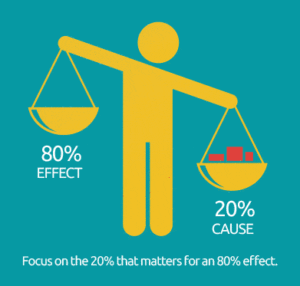
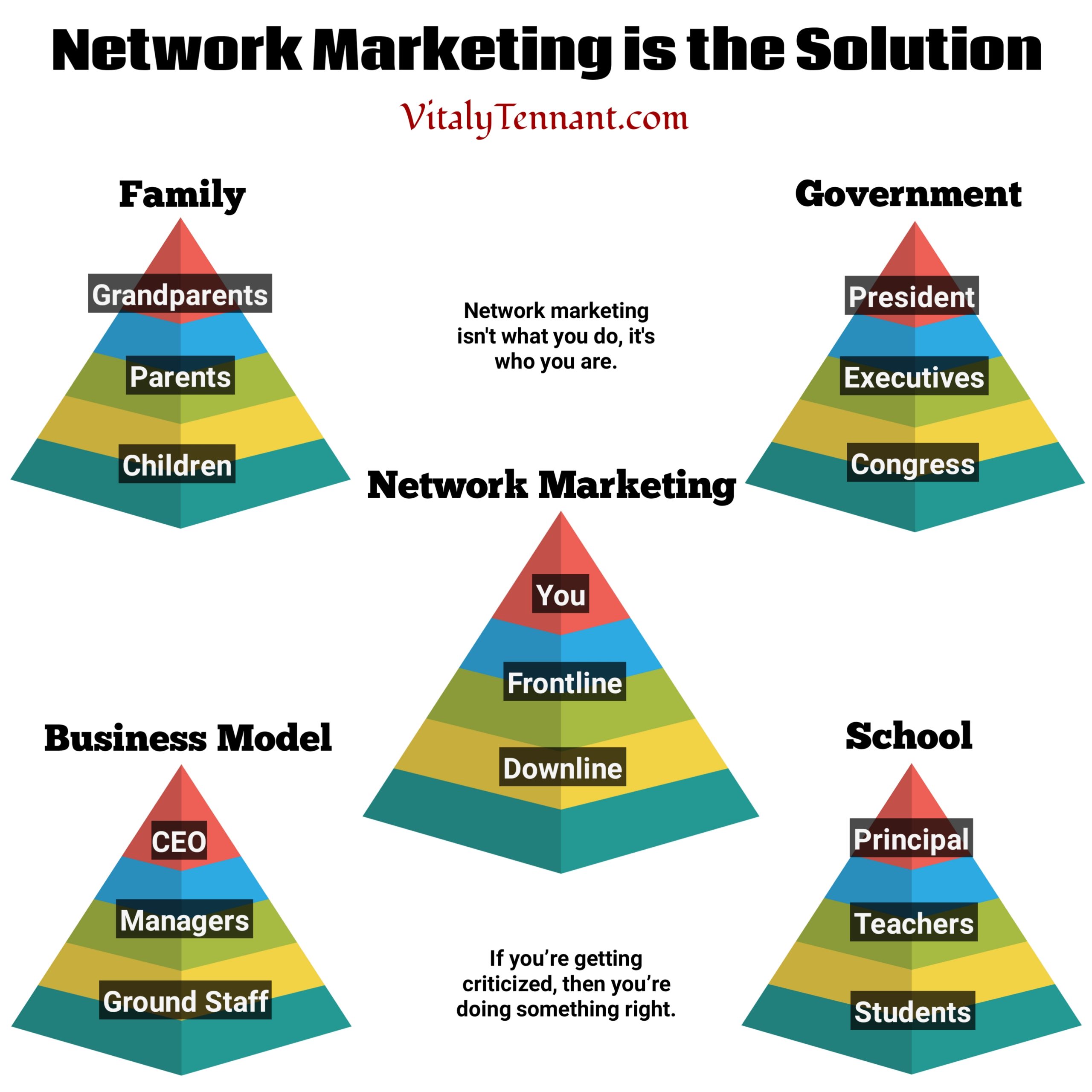
Only 5% of network marketers achieve full-time success, while 95% supplement their income or enjoy the products and/or services they share.
The 5% success rate in NWM mirrors the small percentage of athletes who turn pro or executives who reach the top corporate levels.
Perseverance, a relentless mindset, dedication, and a refusal to quit are what separate the successful 5% from the rest.
Unlike franchises or startups, NWM offers a high chance of success because the outcome relies directly on your personal efforts and execution.
The 95% are not failures; many earn part-time income or find fulfillment, with the pathway to the top 5% remaining open.
The number of individuals involved in network marketing is not insignificant. And even more so have heard about network marketing (NWM) but do not really know what it is or how it works. Entrepreneurship is always evolving, entrepreneurs replace “can’t” with “how” — one of the conjunctions of an entrepreneurial mindset.
According to the World Federation of Direct Selling Associations (WFDSA) there are more than 120 million people utilizing NWM, this number consists of customers and/or independent representatives and this number is increasing annually.
This content provides an overview at the number of individuals who succeed in network marketing full time, establishing it as their main source of income.
Network Marketing Success Rate
Among those involved in network marketing, only 5% achieve sustainable passive or residual income; the remaining 95% rely on jobs and alternative revenue streams to supplement their business ventures.
This baseline isn’t meant to burst your bubble, but it highlights a stark reality: while 95% of participants strive for the network marketing lifestyle, whether they reach that top-tier success ultimately depends on the individual. Why do only 5% succeed while the vast majority fall short? The answer is clear: perseverance. A relentless mindset, foundational character, dedication, and an absolute refusal to quit are what separate the successful 5% from the remaining 95%.
Labeling the remaining 95% as “unsuccessful” is not entirely accurate. Many of these individuals simply believe in the products or services they provide and genuinely enjoy sharing them. For them, that alignment is a success in its own right.
Marginal Work Ratios
When we look at sports — whether it’s soccer, hockey, basketball, or football — the pool of athletes who successfully make a professional roster is incredibly small. In fact, only 1% to 5% of athletes who aspire to play professionally ever secure a spot on a major team.
For instance, in the National Football League (NFL), there are roughly 134 NCAA Division I Football Bowl Subdivision (FBS) teams, each graduating roughly 20 to 25 seniors annually. Across all collegiate divisions, thousands of players enter the draft pool each year, yet only 259 are selected in the official NFL Draft. According to NCAA statistics, the overall probability of a college football player transitioning into the NFL is roughly 1.6%. The odds are heavily stacked, yet the system itself is normalized.
The corporate ladder reflects these exact same proportions. What is the ratio of CEOs or executive-level managers to standard workers? While the numbers shift based on organization size, the corporate world operates on the exact same 1% to 2% distribution. The highest-paying, most sought-after positions are always strictly limited compared to the overall workforce.
The average initial franchise investment is $250,000, excluding real estate.
The average length of a franchise contract is 10 years.
Economists at Wayne State University paint a very different picture of success rates. After four years, only 62% of franchised businesses had survived, compared to 68% of independent small businesses. Furthermore, independent businesses proved far more profitable; over the same four-year period, the average profitability for franchised firms was actually negative.
With franchising, the failure rate is surprisingly high. Additionally, owners have very little say when it comes to protocol, marketing, and advertising. The list of constraints goes on, and the immense amount of paperwork involved should not be overlooked.
Now let’s look at independent small businesses and startups:
A third of small businesses get started with less than $5,000, and 58% start with less than $25,000.
Only 50% of businesses with workers survive five years.
Eighty-two percent of businesses that fail do so because of cash flow problems.
An overwhelming 93% of founders calculated a potential run rate of shorter than 18 months, according to Small Business Trends.
About 90% of startups ultimately fail.
Ten percent of startups fail within their first year.
NWM Validity
When analyzing network marketing with all the available data at hand, the 5% success rate aligns closely with — and often outperforms — the top-tier margins of other highly competitive industries. Furthermore, the remaining 95% of network marketers are not failures; many earn consistent part-time income, cover baseline expenses, or simply find fulfillment using services and/or products they love. They may not have reached their maximum financial potential yet, but the pathway remains entirely open.
Your chances of dictating your own success in network marketing are exceptionally high because the outcome relies directly on your personal efforts and execution. Unlike corporate structures, you designate your own trajectory, growth velocity, and profit margins. With the right application of grit and strategy, entering the top 5% lifestyle margin is a completely achievable reality.
VitalyTennant.com provides content to empower those striving to succeed in network marketing, drawing from years of hands-on experience in building robust organizations and architecting long-term corporate strategies.
As part of the broader VITALIZE Networks ecosystem, this platform connects readers directly to the encompassing VITALIZE framework. VITALIZE delivers the tangible and intangible products, services, and strategic infrastructure necessary to turn personal ambition into optimal health, sustainable wealth, and business longevity.